If you love knitting or just a good gab over a cup of coffee, you’ll appreciate my real-life stories about what happens when we play with pretty string and care for the animals producing the fiber that makes it.
🧶Who Taught You?
|
Hello Reader, "I learned to knit from my Grandmother." I don't know how many times I've read or heard that when I've spoken to knitters about how they got started on their knitting journey. Even in this Great Age of The You Tube, it seems like at least half of the knitters I encounter learned to knit from a beloved older relative. It's often Granny. And she's perfect and patient. She probably smells like gingerbread and lavender and her house sparkles because of the perfect combination of Windex and fairy dust. This perfect and serene woman exudes knowledge of all things homey and crafty. One day, the knitter I speak with apparently sat next to Grandmother and simply absorbed knitting knowledge from the very air she breathed and a few moments of perfect, patient, skillful instruction. And then she ate (still warm!) homemade cookies and skipped away in a state of utter bliss.
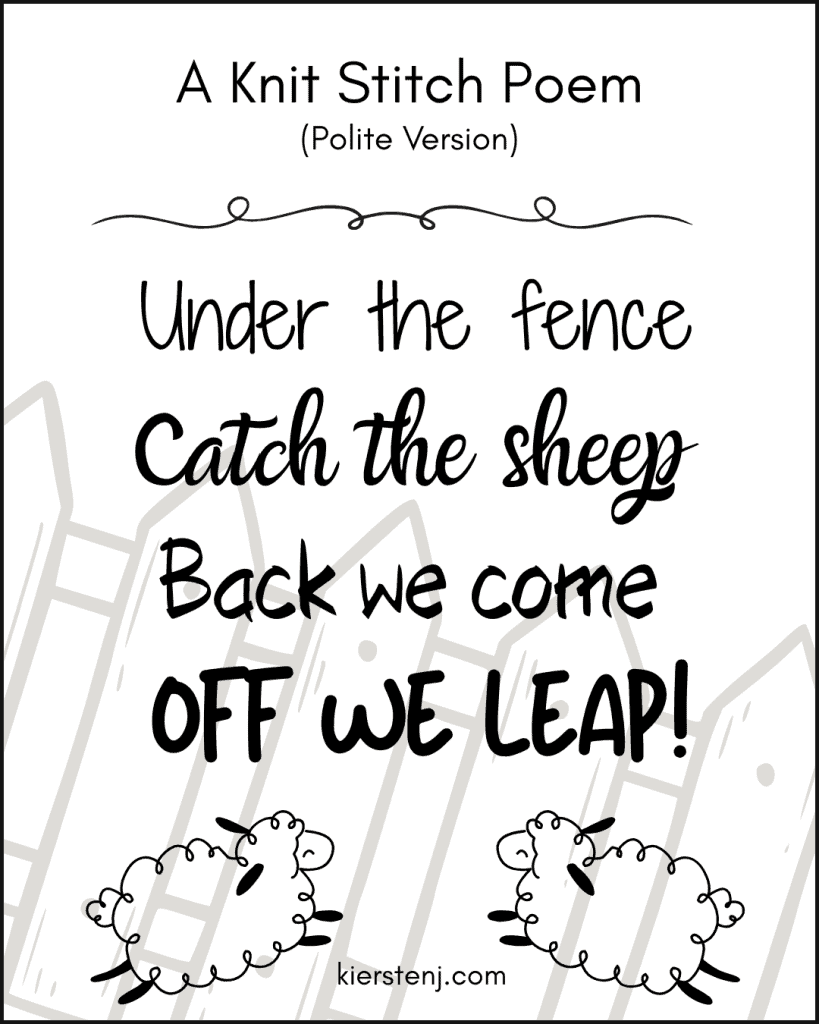
That's my composite from all the "I learned from my Grandmother" stories I've heard. So please imagine how quickly the oxygen exited my body when my beloved four-year-old granddaughter informed me she wanted to learn to knit. I am not perfectly patient, serene, or capable of exuding air that enables four-year-olds to learn how to knit in three deep breaths. The only time I smell like gingerbread is if I've spilled crumbs on myself while snarfing it, and I'm not going to confess to the last time I held a bottle of Windex. My point is, I felt a HUGE amount of pressure to give Pancake (our internet name for this grandchild) the kind of experience described fondly by so many other knitters. To add to the pressure, I'm a knitting educator, for Pete's sake. Teaching Fiber Arts is what I DO. And to add a cherry on top of the pressure sundae I was constructing, what kind of home-schooling veteran balks when a child actually requests to learn something?! This one, apparently. To be fair, four is very young. Pancake may be one of those four-year-olds who is secretly 45 at heart, convinced she knows best how to rule the world and everyone in it, but her fine motor skills haven't quite caught up to her authoritative ambitions. In my Beast to Blanket classes, I find that even some 10-12-year-olds can struggle to make their fingers do what they want them to in the knitting lessons. When very young children express interest in Fiber Arts, I often introduce them to finger knitting. It's simple, it has a quick turnaround from introduction to massive production, and kids seem to love it. The first time Pancake asked me to teach her to knit, I tried to appease her with finger knitting. She was having none of it. She told me plainly, "Granny K, I want to knit with sticks, not fingers." I asked her to wait until she was a little older. When she turned five, she asked again. This summer we had a family gathering scheduled over several days. It seemed like it could be a great time to try a knitting lesson. My biggest fear was that Pancake would get so frustrated by the motor skills required that she'd never want to go anywhere near knitting again without having had the opportunity to really see if she liked it. It doesn't really matter to me if she loves knitting. Of course it would be fun to share it with her, but what I really want for her is that happy memory of sitting with her Granny K to learn something. A few sparkles and rainbows in the memory would be fine with me, too, if we're being brutally honest. So, here's what I did: I found the softest, squishiest yarn I could, in her favorite colors. It would feel great and she'd be excited to see new colors come up as she progressed. I picked shortish wooden needles. I wanted them to be as easy as possible for her to handle, so I picked light weight and short. I also happen to think wood needles feel softer in my hands than metal or plastic, so that influenced my choice as well. I cast on. I decided this experiment would be an introduction and exposure to knitting rather than a full "how-to" lesson. Since I did the casting on, we could jump straight to learning the knit stitch. I mismatched yarn to needle a little. The needles are technically too small for the yarn. But I wanted Pancake to be able to see the new loop very clearly and not have any difficulty in pulling it through the old loop. I used a puffy chenille-like yarn that can't split and also won't slip easily out of a loop when a stitch is dropped. I paired that yarn with US size 8 needles. I taught the polite knit stitch poem. We recited it as we worked. A lot. She loved "off we LEAP!"
I used my hands to guide hers most of the time. She learned to go "under the fence" and "catch the sheep" without any help at all. I kept my left hand on the left needle's loops to keep them on the needle and used my left thumb and pointer finger to help guide her right needle point through the loop on "back we come." 
She would do 7-10 stitches and then decide to take a little break. Most of the time, I initiated the break by asking her if she'd like a little one. She has good focus for a five-year-old, but after a few minutes of high concentration, she'd begin to get a little squirrelly, as you'd expect! She'd go play something else for a little while and then come back and ask to do more knitting. At one point, she informed me, "I'm going to finish this puzzle with Grampy G and then you can get back to teaching me how to knit." Authoritative ambitions.
I was so pleased with how our first knitting lesson went! I don't know if she'll have the golden-hued memories that have been shared with me by other knitters, but I'm very happy it was a positive experience for us. I have custody of what she's decided is going to be her blanket (Go big or go home, Pancake!), and I'll bring it with me when I visit them again in a few weeks. Who knows? Maybe I'll even bring gingerbread cookies. How did you learn to knit? I'd love to hear your story! Kiersten J P.S. Have you checked out the Beast to Blanket Complete Curriculum Guide (PDF Edition) yet? The Early Access Discount code is only good until August 15! Find this and more of my knitting journal entries at KierstenJ.com. |

Kierstenj
If you love knitting or just a good gab over a cup of coffee, you’ll appreciate my real-life stories about what happens when we play with pretty string and care for the animals producing the fiber that makes it.
Hello Reader, Last week's winning poll option was all about the stick-tights. It turns out that stick-tights may have also been slightly symbolic for the week ahead. Flocking Let me share with you the wonderful weirdness I witnessed this week about the flocking instinct in the sheep here at Pemberley Farm. A group of sheep is called a flock, but "flocking" is also the word used to describe the behavior sheep and other animals use to move together as a group. Sheep are happiest as one of many....
Hello Reader, They start off simply when we're young. If Sally has 3 apples and Herman has 4 apples, how many apples do they have all together? As we progress, the scenarios get more complex. We add people and variables and operations, and before you know it, we've got multiple trains leaving stations at different times heading different directions at varying speeds and we are instructed to calculate arrival times, distances traveled, and engineers' first names. As we were working out how to...
Hello Reader, I'm not much of a video gamer. I think I hit my peak with Mario Kart when my kids were little, and I managed to win a race once every dozen or so tries. I was seriously hindered by my tendency to physically lean my body in the direction I wanted my little vehicle to go and distracted by the hysterical laughter that behavior inspired in my fellow racers. Because of my relative ignorance, I had to ask one of the aforementioned chucklers what the term is for when a gamer's skill...